
Visio International
Egypt
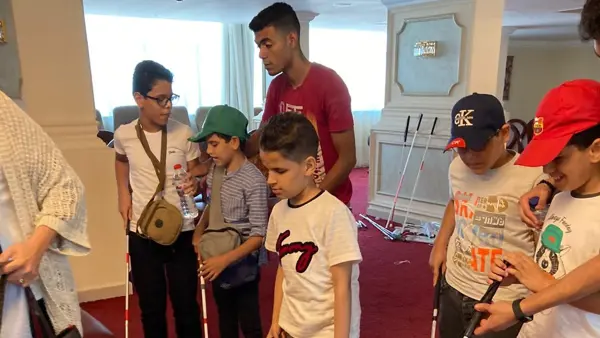
Over nine years, the Road to Light programme transformed support for people with visual impairments in Egypt from direct service delivery into a sustainable, nationally embedded system. Together with local partner Baseera, Visio helped build the expertise, networks and structures needed to ensure that quality low vision and rehabilitation services continue long after the programme's completion.
Programme name: Road to Light
Dates: 2017-2025
Key partner: Baseera Foundation
Visio contact: Els de Keijzer, ElsdeKeijzer@visio.org
Improved access to rehabilitation services
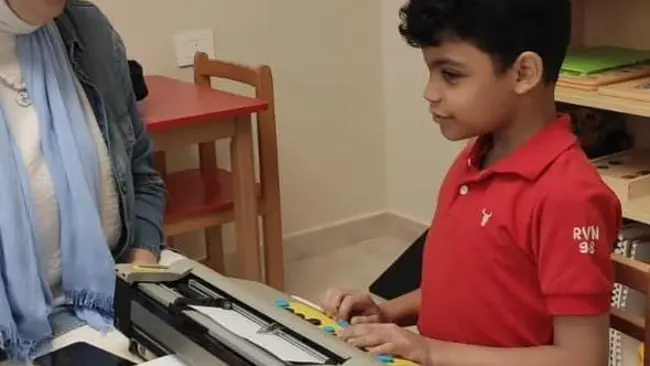
The programme significantly increased access to rehabilitation and inclusion services. More than 1,000 children and adults with visual impairments received rehabilitation support, including low vision services, orientation and mobility training, daily living skills, Braille, computer skills and psychosocial support. This strengthened independence, confidence and participation in school, family life and society.
Building professional expertise
At the same time, the programme created lasting impact through large-scale capacity building. Baseera staff were trained by Visio in specialised areas such as low vision assessment, cerebral visual impairment (CVI), rehabilitation, mobility training, tactile development and inclusive education. This expertise was subsequently transferred to others, resulting in more than 3,000 professionals being trained across eight governorates, including teachers, healthcare professionals, NGO staff, university personnel and government employees.
Accredited training and digital inclusion
A key achievement was the professionalization and accreditation of training programmes. Baseera obtained international CPD accreditation for four specialised modules: Having a Visually Impaired Student in My Classroom, Teaching Braille, Teaching Mathematics to Learners with Visual Impairments, and Supporting Older Adults with Visual Impairments.
In addition, a new digital literacy curriculum for people with visual impairments and IT teachers was developed, supporting greater digital inclusion.
Developing the next generation of specialists
The programme also secured the future workforce for low vision services in Egypt. Together with national and international academic partners, Baseera established Egypt's first postgraduate diploma in Low Vision Therapy and Orientation & Mobility. By 2025, 48 students had graduated from or were enrolled in the programme, creating a sustainable pipeline of locally trained specialists.
Strengthening systems and policy
Beyond individual services, substantial systems change was achieved. The programme contributed to national disability policy, strengthened cooperation with multiple ministries, supported the development of specialised low vision clinics in Cairo and Alexandria, and helped position Baseera as Egypt's leading centre of expertise in low vision and rehabilitation. As a result, support for people with visual impairments is now more accessible, professional and sustainable than ever before.
Key results
More than 1,000 people with visual impairments received rehabilitation services.
Over 3,000 professionals were trained in visual impairment, rehabilitation and inclusive education.
Four internationally accredited training modules were established.
Egypt's first postgraduate diploma in Low Vision Therapy and Orientation & Mobility was launched, with 48 graduates and students by 2025.
More than 200,000 people benefited from eye screening activities, leading to over 11,000 eye operations and 23,000 pairs of glasses through government and partner follow-up programmes.
Three decentralized low-vision service locations were established, improving access to specialised care.